Why Ongoing Orangeburg Pipe Issues Need Action Before It’s Too Late
When you’re shopping around for a place to call home, the house’s plumbing is likely one of the last items to cross your mind. Consequently, you may find the home of your dreams not realizing a plumbing nightmare is brewing beneath. Depending on when your house was built, old sewer pipes could have been installed and left forgotten decades ago. Orangeburg sewer lines are particularly problematic as some of the oldest pipes out there.
If plumbing suddenly fails, that responsibility falls on you as the homeowner. Especially if a sewer inspection wasn’t performed prior to purchasing your home, it’s a good idea to consider hiring a professional to check in on the condition of your home’s sewer system now. Otherwise, Orangeburg pipe issues can be potentially disastrous if ignored, destroying your plumbing and impacting the integrity of your home.
What Is Orangeburg Pipe?
Orangeburg pipes are named for their place of origin, Orangeburg, New York, where affordable plumbing became a priority for homeowners struggling to cover the cost of metal pipelines. Manufacturers in Orangeburg combined wood pulp and asphalt to create the paper pipes known as Orangeburg today. Favored as an inexpensive home plumbing solution post World War II, many homes in the mid-20th century were built with Orangeburg piping for their plumbing.
How Do I Know If My House Has Orangeburg Pipe?
Orangeburg sewer lines were popular from 1945 to 1972 when metals were in low supply after the war. If your house was built during this time, Orangeburg piping was likely used. To confirm, a professional sewer inspection can determine the condition of your home’s pipes. Seek services from a reputable sewer line repair company and be sure to ask if they offer a free sewer inspection to get started.
How Long Does Orangeburg Pipe Last?
Orangeburg piping was intended to last for 50 years, but many homeowners started having problems after just 30 years. As of 1972, PVC plastic replaced Orangeburg as the preferred sewer line material, so paper pipes still around today are well past their prime.
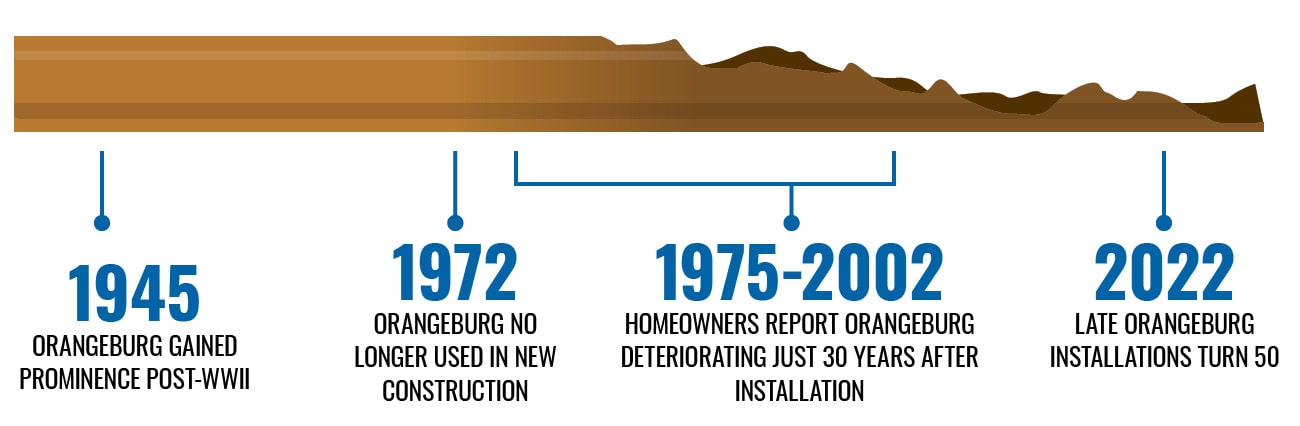
Once known as the “no-corrode” pipe, Orangeburg pipes were appealing and affordable compared to other common materials like iron and steel at this time. However, pliable paper fibers in the Orangeburg material have since caused a multitude of issues that have become prevalent to unsuspecting homeowners, including plumbing blockages and collapsed sewer lines.
Why Old Sewer Pipes Are Problematic For Your Home Plumbing
Orangeburg materials are comparable to cardboard, and we all know wet cardboard isn’t the most reliable structure, especially for something as critical as your home plumbing. As you can imagine, warped, soggy pipes are not structurally sound or sustainable for your home plumbing. These old sewer pipes are brittle and prone to absorbing moisture, causing the pipe to distort and deteriorate under pressure. As the pipe structure warps, your sewer system becomes more susceptible to issues like tree root intrusion, blockages and backups, preventing wastewater flow from your home.
Orangeburg pipe issues will only escalate if ignored, so it’s time to consider Orangeburg pipe repair or replacement solutions to restore your home plumbing, especially if you’re experiencing warning signs like smelly sewer odors, loud gurgling pipes, slow drains and flooding.
Orangeburg Pipe Lining & Replacement Options For More Reliable Home Plumbing
Whether you’re buying a home or feeling frustrated with your home plumbing, a sewer inspection is always a good idea to determine if existing pipelines are salvageable or if a pipe replacement is needed, especially in older homes. Catching issues early can save you money in the long run and prevent you from unknowingly purchasing a money pit with failing old sewer pipes.
If a home is found to have an Orangeburg sewer line, early intervention gives you more options aside from a traditional expensive replacement that requires digging. Trenchless sewer line repair techniques like pipe relining provide fully structural repairs for aging pipes, restoring the pipe from within without tearing up your property.
Does Pipe Lining Work For Orangeburg Sewer Lines?
Pipe relining is a long-lasting, cost-effective solution for Orangeburg pipe repair, so long as the existing pipes are stable enough to withstand pipe liner installation. Orangeburg pipe lining is only viable if the sturdy plastic liner has an intact structure to form in.
If an inspection determines your paper pipes aren’t too distorted or saggy to take on a liner, pipe lining professionals can measure and fit a durable epoxy coating to firm up the foundation of your home’s sewer pipes. Cracks are sealed, pipe structure is reinforced and your home plumbing takes on a new life equivalent to what you’d gain from installing a brand new pipe.
Should Orangeburg Piping Be Replaced?
If Orangeburg sewer lines have collapsed or are otherwise irreparable through trenchless pipe relining, you should seek a sewer replacement to avoid imminent plumbing failure. Even if your pipelines are too precarious for trenchless pipe lining, they may be a good candidate for a trenchless replacement.
Pipe bursting is a trenchless Orangeburg pipe replacement solution that involves inserting a heavy-duty, high-density polyethylene (HDPE) pipe in place of the old pipe through a relatively small access point. As the new pipe slides in, the old sewer pipe is pushed out through another contained access hole. Compared to a traditional replacement that requires digging a trench around the pipe to remove it and install a new pipe, pipe bursting is fast, minimally invasive and cost-effective. However, pipe bursting doesn’t work to replace severely damaged or completely collapsed pipes, so digging may be required if issues aren’t found early enough.
What Does It Cost To Replace Orangeburg Pipe?
The cost to replace an Orangeburg pipe varies depending on the length and condition of the pipe, but generally, homeowners can expect to pay between $150 and $250 per foot of pipe replaced. With the average home sewer line spanning 50 feet, costs can exceed $10,000, especially if digging is required. However, trenchless replacement through pipe bursting typically costs 25% to 30% less than a traditional replacement, emphasizing the importance of acting early before incurring worse damage and more costly restoration fees.
Whether you’re ready to pursue an Orangeburg pipe replacement or eager to learn more about trenchless Orangeburg pipe repair, it’s important you work with an established, trusted provider who can help you weigh the pros and cons of each solution.
Why Homeowners Prefer CME’s Trenchless Solutions For Orangeburg Pipe Repair
At CME Sewer Repair, we specialize in trenchless Orangeburg sewer line repair to restore home sewer pipes. We proudly:
- Prioritize providing the least invasive and most affordable solution for our customers
- Only require digging in unique circumstances when it’s truly the best option
- Serve homeowners across Ohio, Kentucky, Kansas, Missouri and Iowa
- Make it easy to get started with a free sewer line camera inspection
We’re ready to put Orangeburg pipe issues to a stop with our proven sewer cleaning and trenchless repair services.
Is Your Home Overdue For Orangeburg Sewer Line Repair? Contact CME Today!
If you’re looking for a sewer professional with the expertise and precision to respect your home with minimally invasive rehabilitation methods, look no further than CME Sewer Repair. Our Orangeburg pipe lining and pipe bursting solutions offer the ultimate convenience to our customers who are ready to enjoy more dependable plumbing. We’re happy to work within your budget and provide financing solutions to ease the burden of plumbing emergencies. Contact us to learn more about our rehabilitation services for old sewer pipes or to get started with your free sewer inspection.
Get Started With A Free Inspection
To Access Exclusive Updates From CME Sewer Repair, Subscribe To Our Monthly Newsletter Below